Treatment in China
How IJV compression is treated at specialist public hospitals in Beijing, what a consultation involves, and what you can realistically expect.
Why some patients look to China
Surgery for jugular vein compression is a specialised field. Some of the teams with experience in it work at public hospitals in Beijing.
Both bone structures in one team
Some Beijing neurosurgery departments operate on both the styloid process and the C1 transverse process. This matters when more than one structure is involved.
Remote review before you travel
A specialist can look at your original imaging files and talk to you by video before you decide whether to come.
Large public hospitals
Treatment takes place at public tertiary hospitals, with ChinaMedPass coordinating appointments and interpreting.
Published research
The neurosurgery department of Beijing Shijitan Hospital has published a prospective clinical study on resection of the atlas (C1) transverse process for cognitive impairment associated with internal jugular vein stenosis.
Frontiers in Neurology, 2026 ↗We only publish figures that have a citable source.
Treatment approaches
The specialist chooses an approach based on your imaging, your symptoms and your history. Not everyone is a candidate for surgery, and some people are advised against it.
Styloidectomy
The styloid process is removed or shortened, through the side of the neck or, in some cases, through the mouth. The surgeon explains which route they recommend and why.
C1 transverse process decompression
Part of the side of the first neck vertebra is carefully removed to give the vein more room. The procedure is done close to important nerves and vessels, so it needs an experienced team.
Combined procedures
When more than one structure is involved, the procedures may be combined in one operation. Sometimes muscle or other soft tissue is released at the same time.
Non-surgical and other approaches
These include monitoring, managing symptoms, or further tests first. Other procedures may be discussed for some patients. The specialist will explain why one option suits you better than another.
What a consultation involves
The first consultation is usually remote. You only travel if you and the specialist agree it makes sense.
- 1Records reviewed before the callThe specialist looks at your imaging files and reports in advance.
- 2Video consultation with interpretationA ChinaMedPass coordinator joins to interpret into English. A Russian interpreter can be arranged. You can ask anything.
- 3Written summaryOn request, we send you the specialist’s main points in writing, translated. Their medical opinion stays theirs, and we do not add to it.
- 4Possible further testsThe specialist may ask for new or repeat imaging, either at home or in Beijing.
Hospitals and specialists
We only list specialists whose details we have checked on the hospital’s own website. Each profile shows when it was last checked.
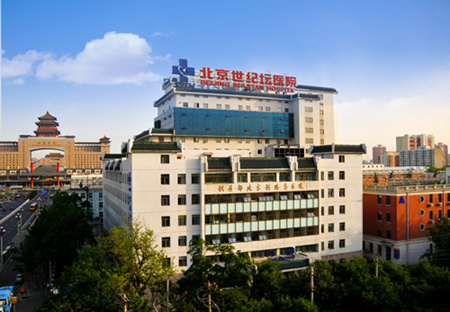
Beijing Shijitan Hospital, Capital Medical University
首都医科大学附属北京世纪坛医院
Public tertiary (Grade 3A) hospital, Beijing · Department of Neurosurgery
Address (Chinese, for your taxi): 北京市海淀区羊坊店铁医路10号
Source: official hospital website · checked October 2026
Prof. Hu Zhiqiang (胡志强)
Chief Physician, Professor · Honorary Director of Neurosurgery
Clinical focus: Microsurgical and endoscopic neurosurgery (hospital’s official profile); corresponding author on the department’s clinical research into surgical treatment of internal jugular vein stenosis.
Clinic days: Confirmed at the time of booking
Checked · October 2026Official profile ↗
Ask about this specialist →Profiles are added only once verified. Schedules change often — availability is always confirmed with the hospital when your appointment is booked.
Realistic expectations
Outcomes vary
Some patients report improvement. Others report little or none. Nobody can promise a result.
Surgery has risks
Every operation carries risks, including some specific to this area of the neck. The surgeon explains them before you consent.
Recovery takes time
Hospital stay and recovery depend on the procedure and on you. Ask the surgeon for a timeline for your case.
Follow-up matters
Follow-up imaging and remote check-ins are usually part of the plan. We help coordinate them after you return home.
Appointments, fees and travel
This site is for information only. Appointments, fees and practical arrangements are handled by ChinaMedPass on its own website.
Go to chinamedpass.com →Would you like a specialist to look at your case?
Request a case reviewLast reviewed: October 2026